
Championing Safe Housing for Victims of Violent Crime
Ohio’s Safe at Home program protects survivors of domestic abuse, stalking, human trafficking and sexual battery by shielding their home addresses from the public record. Administered by the Secretary of State’s office, the program is practical, targeted and effective. It gives people who have already endured trauma a measure of security and peace.
But the program’s scope is too narrow. In meetings with Crime Survivors Speak members in Ohio, one point came through repeatedly: many victims of violent crime aren’t eligible for these protections. Survivors of gun violence and families who have lost loved ones to homicide often must navigate their grief and daily life without the basic safety measures others receive. They are no less vulnerable, and no less deserving of protection.
Other states, including Wisconsin, Missouri and Minnesota, use broad eligibility criteria for their address confidentiality programs that allow victims with a range of victimization experiences to participate, including victims of gun violence and those who lost loved ones to homicide as envisioned in SB 225 / HB 396. Ohio would be joining these states in providing more safety and security to more victims of violence.
In written testimony, Tia Benton, a member of Crime Survivors Speak from Ohio who works with crime victims, noted that she knows “better than most that if a victim of crime doesn’t feel safe at home, they can’t heal. If their address can be compromised - they aren’t safe.”
Recognizing this gap, the Ohio Secretary of State testified during the budget process in support of expanding the program to include more victims. He identified a modest funding increase to administer the broader eligibility that was included in this year’s budget. This is not a radical policy shift. It is a reasonable fix to a program that is already working.
Expanding Safe at Home is an opportunity for state lawmakers to do something both practical and compassionate. It strengthens public safety, supports survivors, and reinforces that the need for safety continues in the daily lives of those left to rebuild.
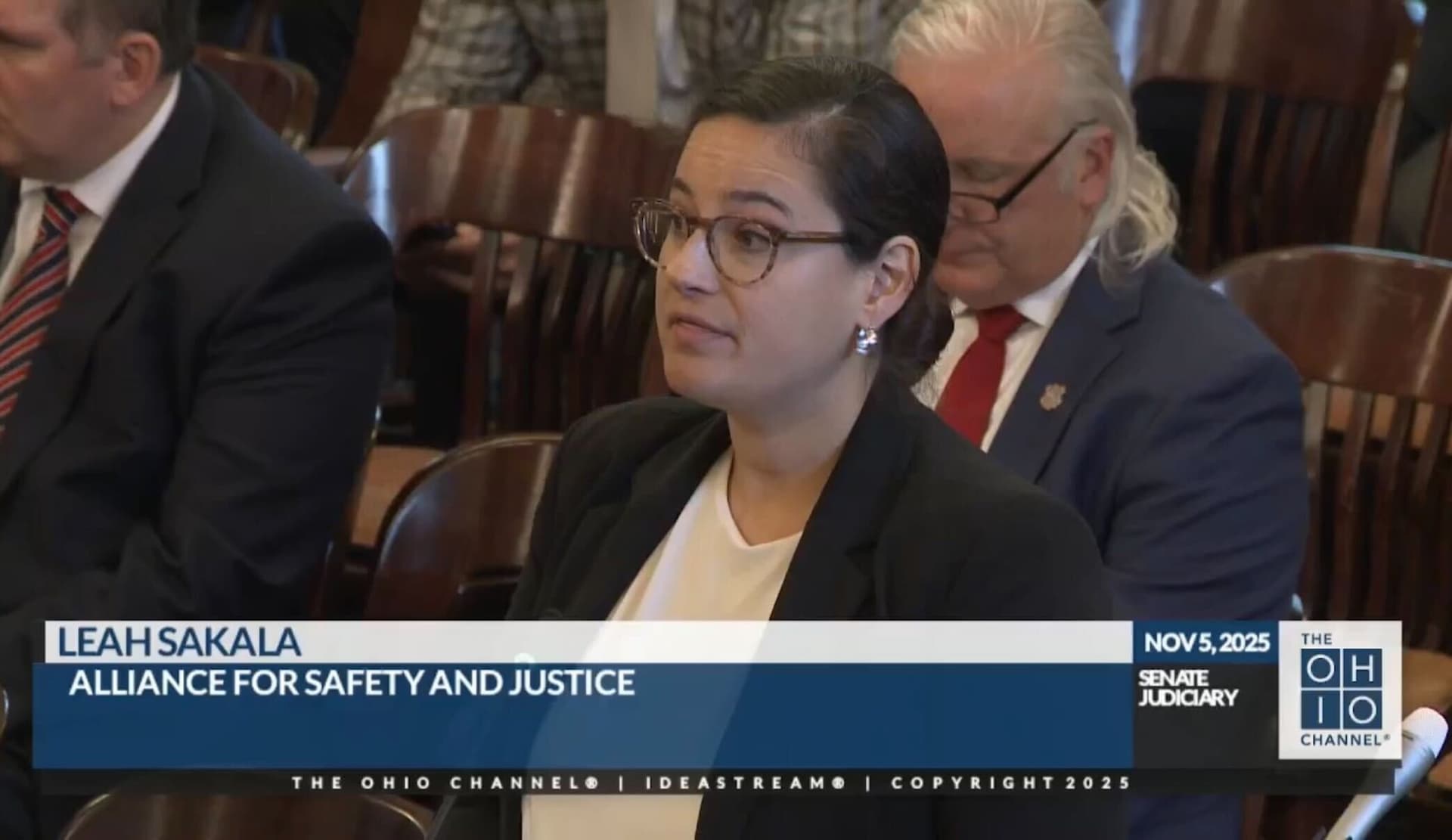
Alliance for Safety and Justice Senior State Policy Manager Leah Sakala noted in her testimony, “...some victims of other types of violence may also need to protect information about where they live, but are not currently eligible to participate in Safe at Home. For example, a gunshot victim may need to relocate for safety reasons and then shield their new address from people who may come to harm them again. Or a parent who lost a spouse to homicide may need to sign their children up for school without endangering their family by exposing where they live.
“SB 225 / HB 396 would extend eligibility for Ohio’s Safe at Home address confidentiality program to survivors of more types of violent assault, including victims of gun violence and family members of homicide victims. This bill has the strong support of crime victims across the state, including our membership network”
In her role as the director of a Trauma Recovery Center, another member of Crime Survivors Speak from Ohio, Sheila Nared, noted:
“I work with family after family who have had a loved one killed, and we move them to housing in a different area of the city to keep them safe. But because their address is not confidential, they live in constant fear that the perpetrator will find them. One woman that I worked with had a neighbor who killed her boyfriend. She and her children moved to try to get safety, but because their address was not confidential, the perpetrator came to the new home and kicked her door in when they weren’t home, then a week later, he shot up her house while her daughter was at home. These travesties need to stop.”
SB 225 / HB 396 will provide relief for the people who survive these devastating experiences and need help to be safe.
Read testimonies from Crime Survivors Speak members from Ohio, our Senior State Policy Manager, Leah Sakala, who testified in the Senate Judiciary Committee on November 5, 2025, and the Ohio Domestic Violence Network and the Ohio Alliance to End Sexual Violence here.
We are grateful to Senator Susan Manchester who filed legislation in the Ohio State Senate, SB 225 to expand the program, and to Representative Bernie Willis who filed a companion bill, HB 396, in the Ohio State House.