
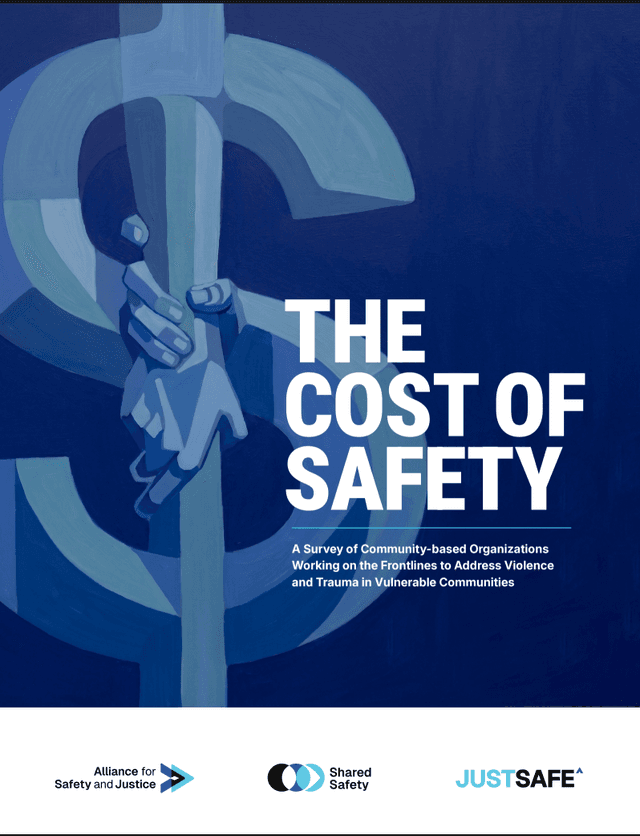
The Cost of Safety: A Survey of Community-based Organizations Working on the Frontlines to Address Violence and Trauma in Vulnerable Communities
This survey of 105 community-based organizations across 28 states reveals a violence prevention and community safety field under significant and growing strain. During the survey period of February 1, 2025 to February 1, 2026, 80% of the organizations surveyed experienced funding reductions or terminations, with the most severe impacts concentrated among smaller direct-service organizations with budgets of $250,000 or less, those serving large to mid-size cities, and those providing community violence intervention or reentry services.
The consequences of this loss of funding are immediate and profound: reduced ability to provide services, program eliminations, staff layoffs, and increased barriers to care for communities already experiencing disproportionate violence and harm.
Organizations surveyed report that every major funding stream, whether federal, state, local, or philanthropic, has become more difficult to access, creating a destabilizing environment in vulnerable communities that undermines both crisis response and long-term prevention of crime and violence. Despite these challenges, the findings point to a clear path forward. Targeted investments in organizations working directly within communities disproportionately affected by violence and victimization can serve to rebuild the violence reduction and prevention infrastructure necessary to ensure safer communities for all.
Key Findings
Small Organizations, Biggest Burden: Small community-based organizations have been most affected by funding cuts and resulting financial instability. In addition, smaller nonprofits reported the greatest difficulty accessing funding, often due to limited administrative capacity to manage complex grant applications, compliance requirements, and reporting obligations.
Essential Work, Unstable Funding: Organizations delivering victim services, trauma recovery programs, community violence intervention (CVI), and mental health support reported particular challenges securing sustained funding, despite providing essential, resource-intensive, direct services to individuals and communities.
Rural Providers Left Behind: Rural organizations encounter structural barriers to accessing funding. Providers serving rural communities experience heightened challenges due to smaller staff capacity, fewer local funding opportunities, and infrastructure barriers that make participation in competitive funding processes more difficult.
Trusted By Communities, Shut Out By Funders: Local grassroots organizations encounter access gaps. Organizations led by and serving historically marginalized communities reported difficulty accessing traditional funding streams, even though they often maintain the strongest trust and relationships within communities most impacted by violence.
The Closer To The Community, The Harder to Fund: Funding barriers disproportionately affect organizations closest to community need. The survey suggests that the organizations most embedded in and responsive to communities experiencing violence are often those facing the greatest obstacles in securing sustainable funding.
As a result of funding disruptions and staff furloughs, our team has been unable to provide a full, timely response following a recent violent incident in the community. Where we previously would have deployed community outreach workers immediately to support victims’ families, de-escalate tensions, and connect those impacted to resources, our limited staffing and part-time rotational coverage meant the response was delayed and incomplete. Community members expressed frustration and fear, not because support was unnecessary, but because trusted, familiar responders were no longer consistently present at a moment when they were most needed.
Longer waitlist due to reduction in hours for staff. This means fewer clients are served.
Implications for Public and Private Funders
For funders, policymakers, and system leaders shaping community safety ecosystems, the survey results provide urgent priorities and core recommendations:
Stabilize Infrastructure – Provide multi-year, flexible, unrestricted funding to sustain organizations working on the frontlines to prevent and reduce violence.
Invest in Prevention and Long-term Solutions – Balance funding between crisis response and interventions with investments in public health approaches to safety such as workforce development programs, housing, and youth mentoring.
Prioritize Equity in Grantmaking – Resource organizations closest to the problems the funder seeks to solve by reducing barriers to funding for organizations serving communities disproportionately impacted by crime, violence, and victimization (low income communities, rural communities, communities of color, and organizations rooted in community-driven, resident-led approaches to addressing violence). Some examples of reducing barriers are an open application process, reducing the length and complexity of funding applications, conducting pre-application webinars that provide insight into the funder’s application process and priorities, and simplifying language within the application.
Strengthen the Public Safety Ecosystem – Support collaborations, coalition-building, and multi-disciplinary approaches to combating violence.
Fund Capacity Building – Provide training and technical assistance to grantees on organizational development, financial controls and budgeting, communications and media relations, and advocacy.
This survey makes clear that community-based organizations on the frontlines of addressing violence and promoting healing and resilience in their communities are operating in an unstable and unsustainable funding environment. Many of these organizations are the backbone of violence prevention in their communities, and are increasingly called upon to do more with less due to demand for services. For funders and policymakers, these data reveal a central truth – sustainable and effective public safety efforts require sustained and stable investment in organizations closest to the work. Without such thoughtful investment, at-risk communities are not only in jeopardy of losing programs, but the very infrastructure that makes healing and prevention possible, which contributes to greater public safety outcomes for us all.
Read more in the full report below.