
The Right to Heal and a New Approach to Public Safety
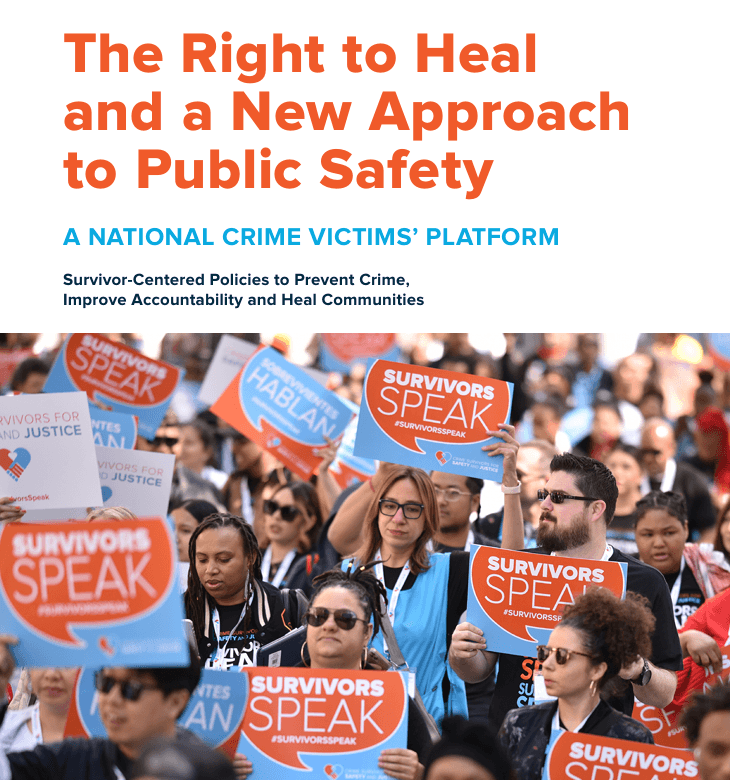
Over forty years ago, the crime victims’ rights movement emerged to ensure victims had a voice in the criminal justice system. As a result, every state has enacted a victims’ bill of rights law, with two-thirds incorporating these rights into their state constitutions. However, the phrase “victims’ rights” has become synonymous with rights in courts and during a prosecution, rather than what survivors say brings real healing and safety.
This framework has yet to deliver what we now know are needs and preferences of the overwhelming majority of victims – including a need for healing, and a preference for violence prevention and rehabilitation over harsh punishment. Victims overwhelmingly want healing and crime prevention, and to have what happened to them to never happen to them or anyone else again.
It is time to redefine “victims’ rights” as a real right to heal. With healing and safety as the goal, policies would focus on stopping violence before it starts, interrupting cycles of crime, and creating pathways for healing and wellbeing.
This report outlines a bill of rights for victims followed by three policy strategies including twelve practical recommendations policy makers can implement to pursue a new approach to public safety that centers victims.
If victims had a real right to heal, and we pursued a new approach to public safety, they would have:
- A right to have trusted and accessible help to recover from trauma.
- A right to emergency financial help, without red tape or unfair restrictions.
- A right to safe housing in the wake of violence.
- A right to maintain job stability, including leave time and reasonable accommodations.
- A right to debt forgiveness and financial recovery when victimization caused debt.
- A right to support in schools and communities for children exposed to violence.
- A right to dignity, respect, and support for the victims of unsolved crimes.
- A right to protection from deportation arising from victimization to keep victims’ families together.
- A right to protection from arrest or conviction arising from victimization.
- A right to post-injury help, regardless of who caused the harm, including law enforcement.
- A right to ask for restorative justice or alternative accountability processes.
- A right to communities where violence prevention and crisis assistance are considered essential safety services, not just more incarceration.
Three strategies to protect victims' rights:
Guaranteed care: strong protections and accessible healing services for all survivors
Effective accountability: Alternatives to traditional legal processes and incarceration
Universal crime prevention: scale up proven community solutions that stop cycles of harm
Read more in the full platform below.